


Imagine a world where the smallest possible dollar bill was worth $30. Instead of our current incremental system of $1, $5, $10 and so on, imagine the smallest bills were worth $30, $60 and $90. Barring electrical payments, how would you make purchases, or worse, make change?
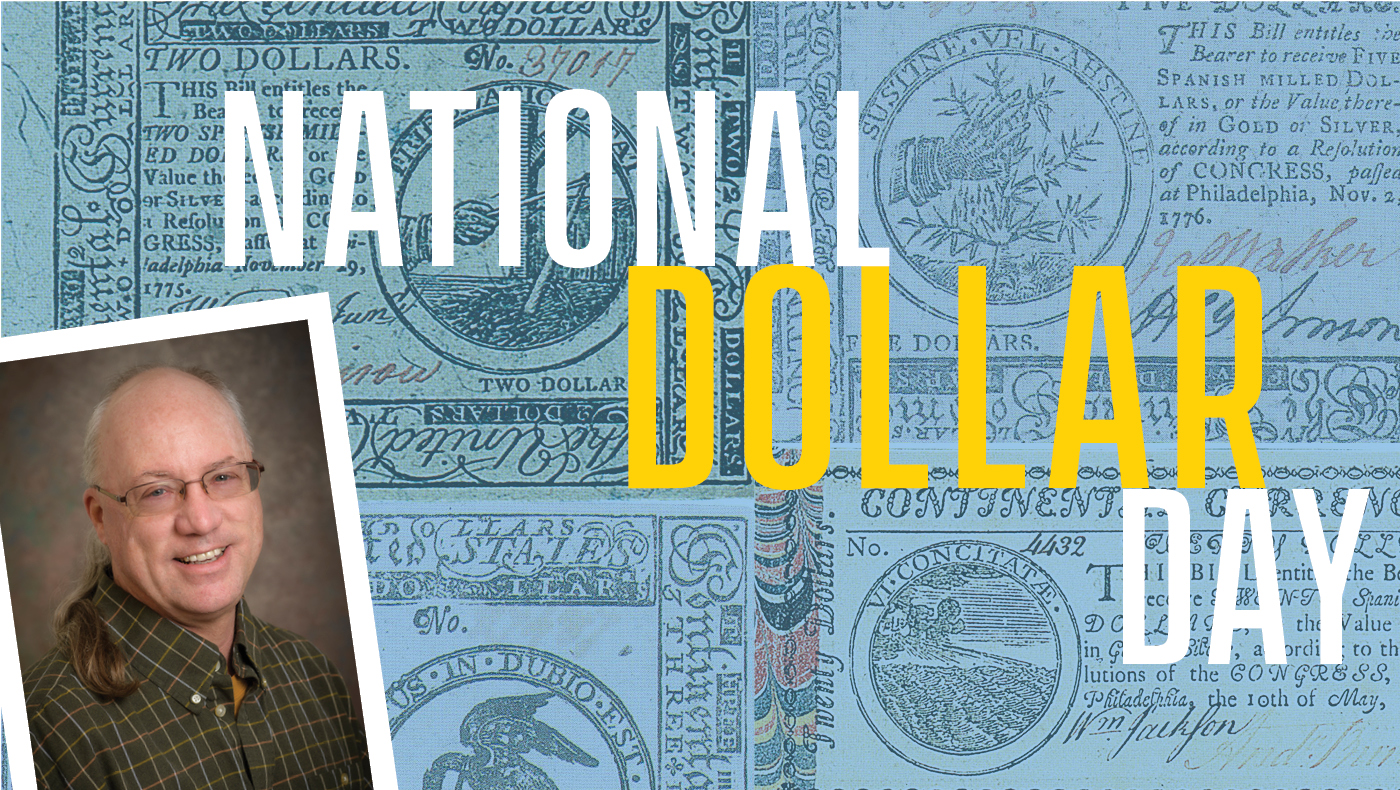
You may be surprised to discover that this scenario was a reality for Americans living in the 1770s, according to new research from University of Delaware economics professor Farley Grubb (pictured above).
Grubb’s research arrives just in time for today’s National Dollar Day, which commemorates the day in 1786 when United States Congress established the dollar as the official unit of account for the federal government. Last year, Grubb and fellow economics professor Vincent Marra shared five interesting facts you may not have known about the U.S. dollar and its 231-year history.
And this year, Grubb has uncovered the new and unusual fact that the first U.S. dollar, called the Continental Dollar, was issued in a unique denominational sequence: $1, $2, $3, $4, $5, $6, $7, $8, $20, and $30. At the time, $1 was worth around $30, and could pay for a week’s room and board for a soldier. This means that there were effectively no small bills in the dollar’s design.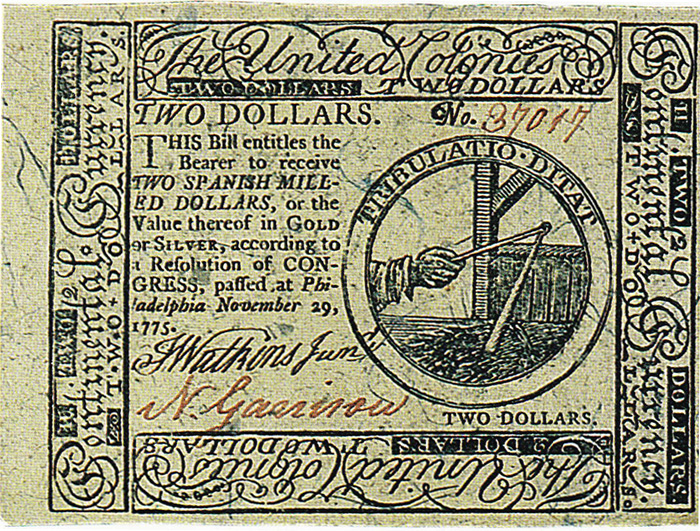
“This denominational spacing is unlike anything that went before in colonial America, and unlike anything in modern currencies today,” Grubb said. “It is hard to find any other currency with such an odd denominational sequence as the Continental Dollar. In fact, the Continental Dollar’s denominational sequence is more than unusual; it is downright bizarre.”
So, why did the first U.S. dollar have such a strange denominational structure? Grubb explained the system as an effort by the Revolutionary Congress to make it difficult for soldiers to use Continental Dollars as a medium of exchange.
“The denominational sequence allowed Congress to meet soldiers’ monthly pay in the fewest large bills possible, such that soldiers would find it hard to spend them, as they could not make change in dollars in a transaction,” Grubb said. “Congress hoped soldiers would just hold their pay as savings and redeem the bills from the government in the future post-war. That way, the flood of Continental Dollars emitted to fund the war would not affect prices in the marketplace during the war.”
In practice, this led to consumers exchanging Continental Dollars for state currencies or credits. They also may have bartered or traded using the dollars.
“Within two years, however,” Grubb continued, “the length of the war, the continued flood of Continental Dollars, and the government’s need to use them more for buying war supplies in the marketplace than just as soldier’s pay defeated this initial intent.”
Check out last year’s National Dollar Day article for five more little-known facts about interesting chapters in the history of the dollar