


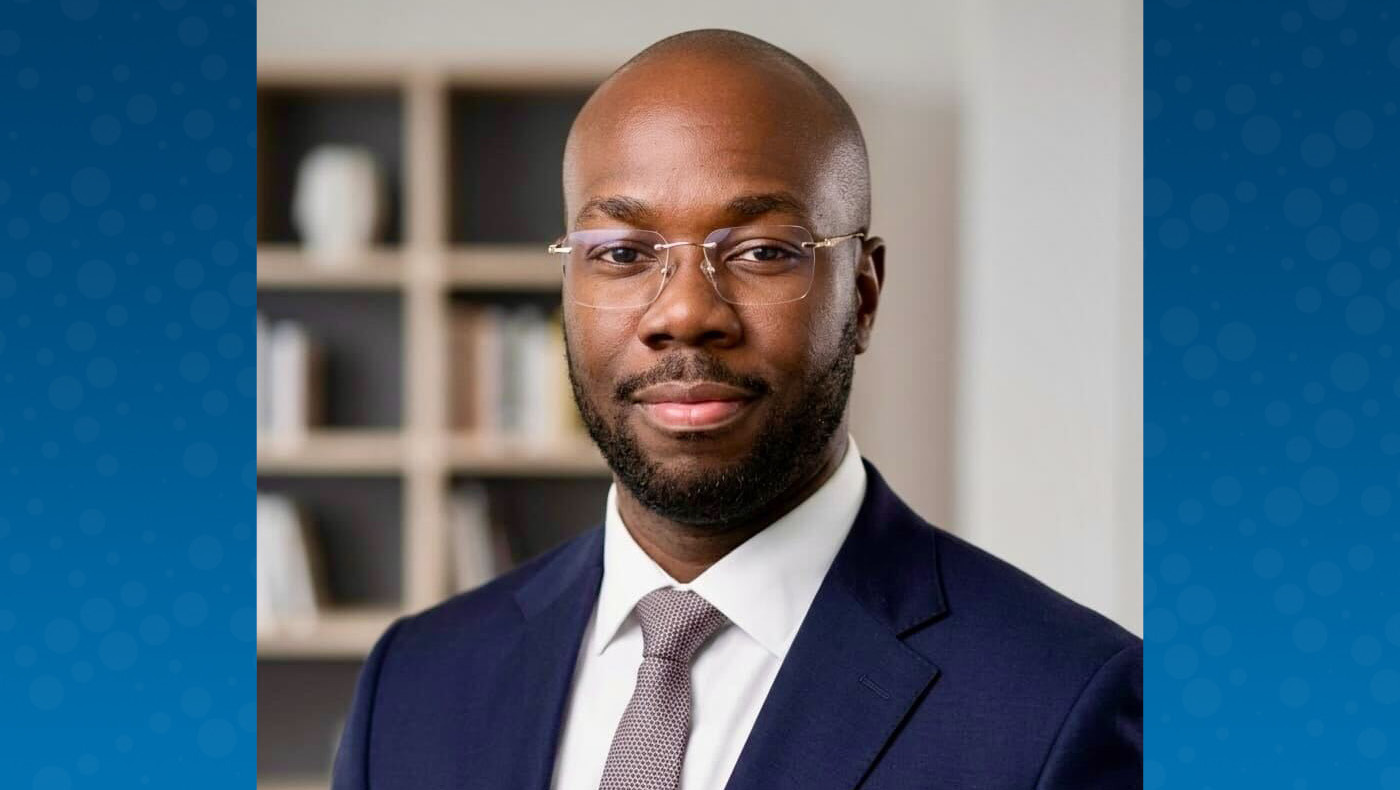
Jason Christie, a Wilmington, Del. native and 2025 Ph.D. graduate in economics from the Lerner College of Business and Economics, is a digital fraud innovation strategist at Bank of America. As a graduate student, he chose Lerner for its strong economics faculty and was especially impacted by its focus on rigorous, structured thinking and solving real-world problems using data. His training in econometrics continues to guide his work today, where he analyzes customer behavior and helps improve fraud detection strategies by separating signal from noise. Christie credits the program’s challenging environment, along with support from peers and faculty, for helping him build the analytical and problem-solving skills he uses in his career.
Lerner: Why did you decide to pursue your program at the Lerner College?
Christie: I chose the Lerner College for the strength and reputation of its faculty, especially in the economics department.
Lerner: What did you learn through this opportunity that you wouldn’t have learned anywhere else?
Christie: What stood out most was learning how to think rigorously under uncertainty. The program didn’t just teach economics, it trained me to break down complex, messy real-world problems into something structured and testable. That ability to move from theory to evidence, and from evidence to decision-making, is something you really only develop through the intensity of a Ph.D. environment.
Lerner: Please share an example of a course or concept that you were able to apply directly to your life and/or career.
Christie: Econometrics has been the most directly applicable. The idea of identifying causal relationships, separating signal from noise, shows up in my work every day. Whether I’m evaluating fraud strategies or analyzing customer behavior, I’m constantly asking, “Is this relationship real, or just correlation?” That mindset has been invaluable in data analytics.
Lerner: Describe an important connection you have made through your program (personal, professional, peers, mentors, professors, etc.)
Christie: The most meaningful connections have been with my peers and mentors. My classmates became a support system; we challenged each other, learned from each other and pushed through the toughest parts of the program together. At the same time, faculty mentors played a huge role in shaping how I approach problems and research. Those relationships didn’t end at graduation; they’ve become lifelong professional and personal connections.
Lerner: If you were to describe your classmates in one word, what would that be?
Christie: Resilient. Everyone came in talented, but what really defined my classmates was their ability to persist through setbacks, ambiguity and long stretches of uncertainty. That resilience is what ultimately carried us through.
Lerner: How did you balance your career with your studies?
Christie: Balancing both required discipline and trade-offs. At times, it meant limiting my social life and being very intentional with how I used my time. I had to prioritize constantly, focusing on what mattered most in the moment and accepting that I couldn’t do everything at once. It wasn’t always easy, but it built a level of focus and time management that I carry with me today.
Lerner: Fill in this sentence: “My program helped me become…”
Christie: A disciplined thinker who can turn complex data into meaningful insights and real-world impact.
Lerner: What piece(s) of advice would you give to current UD students?
Christie: Take full advantage of your professors, they are an incredible resource. Go beyond the classroom: ask questions, seek guidance and build relationships. Also, don’t be afraid to wrestle with difficult concepts. Growth in a program like this comes from leaning into challenges, not avoiding them.
Lerner: What are your professional plans or next steps for the future?
Christie: I plan to continue growing in data analytics and fraud strategy, focusing on building innovative, data-driven solutions that improve decision-making and reduce risk. Longer term, I’m interested in bridging the gap between academic research and industry practice, bringing rigorous analytical thinking into real-world applications at scale.
Lerner: What piece(s) of advice do you have for fellow businesspeople?
Christie: Be data-informed, but not data-blind. Data is powerful, but it requires context, judgment and a clear understanding of underlying assumptions. The best decisions come from combining analytical rigor with practical insight.
Lerner: What does it mean to you to be a Lifelong Lerner?
Christie: To me, being a Lifelong Lerner means staying curious and adaptable. It’s about continuously refining how you think, not just what you know. The world changes quickly, and the ability to learn, unlearn and relearn is invaluable, and the economics department at the Lerner College laid that foundation exceptionally well.
Lerner: Is there anything else you’d like to add?
Christie: This journey has been both challenging and rewarding. It pushed me to grow not just academically, but personally and professionally. Looking back, I’m grateful for the experience and excited to carry what I’ve learned into the next phase of my career.