


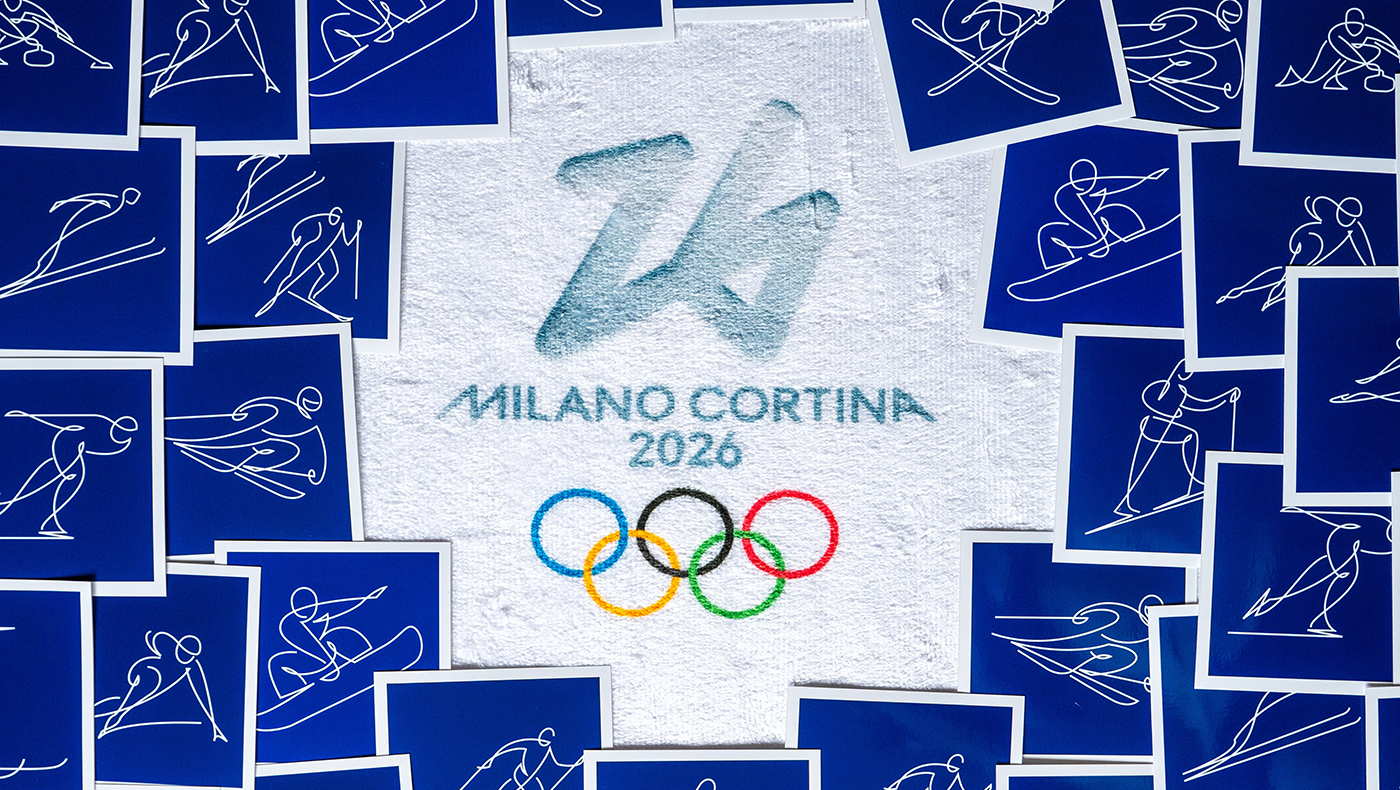
With the 2026 Milan Cortina Winter Olympic Games underway, sport management professors in the University of Delaware’s Alfred Lerner College of Business and Economics gave their perspectives on several economic aspects of the Games. Instructor of Sport Management John Allgood and Assistant Professor of Sport Management Nataliya Bredikhina discussed the opportunity for athletes to elevate their personal brands and the economic impact of the host cities.
Olympic spotlight offers athletes rare chance to elevate personal brands
For many Olympic athletes, the Games represent far more than a shot at a medal. They offer a fleeting but powerful opportunity to transform athletic achievement into long-term personal brand value.
“For a lot of these athletes, this is their one shot every four years to really elevate themselves from a brand standpoint,” Allgood said. “Especially if it’s their first Olympics, they win a medal and their brand skyrockets, which means more money is going to come their way from endorsements.”
Simply qualifying for the Olympics can lead to modest sponsorships, but Allgood said success on the world stage dramatically changes an athlete’s marketability. “If you win a medal, all of a sudden your value goes way up,” he said. “They’re going to have companies that are going to want to endorse them moving forward.”
Television exposure plays a major role, particularly for sports featured in prime time. Events like figure skating receive extensive coverage, including athlete interviews and storytelling by high-profile broadcasters. “To be interviewed by Mike Tirico or Snoop Dogg on NBC, and for that to be broadcast to millions of people, that raises the athlete’s brand unbelievably,” Allgood said. “You can’t put a price on that.”
That exposure is critical, as endorsement deals are often the primary way Olympians generate income. “That’s how Olympians make their money,” Allgood said. “To make real money, you have to win and then get endorsements.”
However, many Olympic athletes face a unique challenge: limited visibility outside of the Games. “I’m not familiar with most of the athletes competing in the Winter Olympics,” Bredikhina admitted. “In mainstream sports there’s a lot of coverage that allows people to build familiarity around your brand recognition. But for Olympic sports, we don’t really hear too much about most of these sports.”
That makes the Olympic moment especially valuable, as fans connect strongly with athletes representing their countries. Still, Bredikhina said capitalizing on that attention requires strategic effort, particularly through social media. Many Olympians fall into the “nano” (between 1,000 and 10,000 followers) or “micro” influencer (10,000-100,000 followers) categories, and often lack professional marketing teams.
Balancing brand-building with competition can be difficult. “Athletes are trying to maximize the time they are in competition to build their brand, but they also have to stay focused on the competition,” Bredikhina said, adding that online harassment during the Games can also be a major distraction.
One effective approach, she said, is storytelling. Audiences want more than medals – they want to understand the athlete’s daily life and emotional journey. “An audience will connect with that athlete’s story,” Bredikhina said. “Try to build a sustainable narrative that is going to offer something interesting to that audience even after the Games end.”
Cross-promotion among teammates and fellow competitors can also amplify exposure, especially in team- or nation-focused events. Sustained engagement matters more than temporary spikes in followers, Bredikhina said, as sponsors prioritize consistent interaction and audience retention.
Ultimately, while medals can launch an athlete’s brand, long-term success depends on how they manage leveraging the Olympic stage beyond the podium – something few opportunities in sports can match.
The Olympic Effect: What Hosting the Games Really Means for a City’s Economy
When a city wins the right to host the Olympic Games, the announcement is often framed as an economic jackpot – billions in investment, a surge of visitors and a permanent place on the global stage. But the real economic impact of hosting the Olympics is more complicated than the headlines suggest.
In the short term, the Games undeniably bring an influx of spending. Visitors arrive from around the world, filling hotels, restaurants, shops, and transit systems for more than two weeks. “It’s enormous, because the impact is based on how many visitors from outside the city come in and what they spend, not just on tickets but hotels, food and shopping,” Allgood said. “With the games lasting over two weeks, that’s a major impact.”
That burst of tourism often creates a temporary boom for service workers and small businesses, particularly in host neighborhoods near competition venues. For cities like Milan, the economic story extends beyond immediate visitor spending. Global television coverage acts as a massive marketing campaign, showcasing the host city’s culture, food and identity to millions of viewers worldwide.
“Besides the economic impact, you’ve also got to think about the identity of Milan,” Allgood said. “With the Olympics being there, NBC will be running a lot of features on the food and cultural experience. So it’s almost like a campaign for the city itself.”
That exposure can shape tourism patterns for years to come. Even viewers who never attend the Games in person may add the host city to their future travel plans. “You have the people going to the Olympics, but then there’s a whole other group watching on television thinking, ‘That would be a great place to vacation,’” Allgood said.
Still, economists caution that long-term benefits are far from guaranteed. Host cities often shoulder massive costs to build stadiums, athlete villages and transportation infrastructure, some of which struggle to find use once the Olympic spotlight fades. Studies of past host cities have found that while tourism may spike during the Games, those gains can be offset by construction overruns, public debt and displaced local activity.
Allgood referenced the 1976 Games that left Montreal and its province, Quebec, with about a billion Canadian dollars in debt which took 30 years to repay.
In the end, the economic impact of hosting the Olympics depends not just on the crowds that arrive, but on what the city builds – and how wisely it builds it – once the world’s attention moves on.